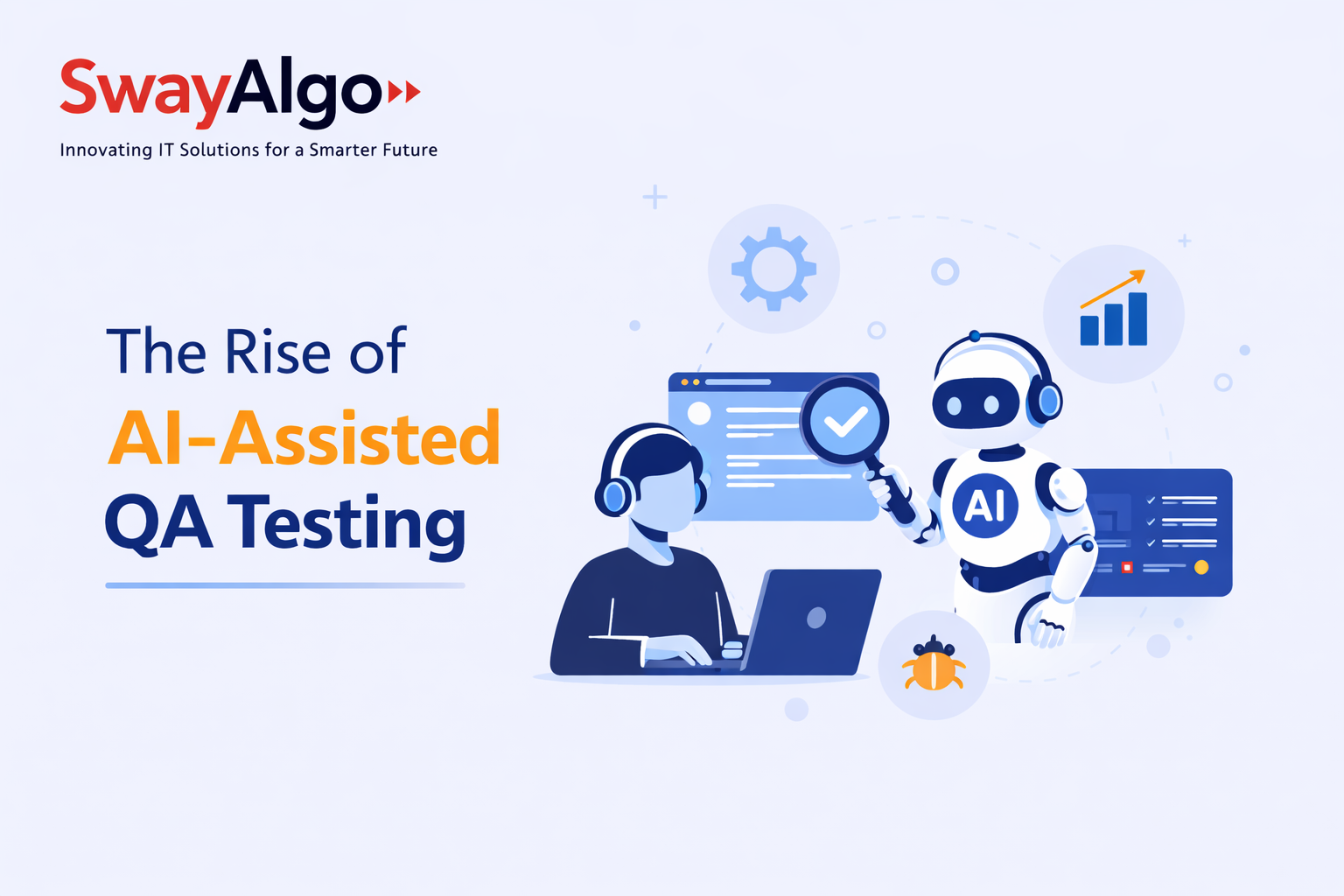

Quality Assurance (QA) has traditionally been a structured and documentation-heavy process. Test cases are written manually, automation frameworks are carefully designed and test cycles follow strict workflows. While this approach ensures stability, it can slow down development in fast-moving engineering environments.
With the emergence of AI-assisted development and vibe coding, QA testing is evolving into a faster, more adaptive process. Testers can now generate scripts, experiment with scenarios and debug issues rapidly with the help of intelligent tools.
This shift allows QA teams to detect bugs earlier, increase automation coverage and reduce testing time significantly.
Understanding Vibe Coding in QA
Vibe coding is an approach where engineers build and refine solutions through rapid experimentation and iterative improvement rather than heavy upfront planning.
In QA testing, this approach allows testers to:
- Quickly generate test scripts
- Experiment with different testing scenarios
- Iterate and refine automation scripts rapidly
- Validate ideas before building full frameworks
AI-powered tools like ChatGPT and GitHub Copilot help testers create scripts, debug issues and generate test cases almost instantly.
Instead of writing every test manually, QA engineers can start with AI-generated scripts and refine them based on testing needs.
AI-Powered Test Case Generation
One of the biggest benefits of AI in QA testing is its ability to generate meaningful test cases automatically.
AI can analyze:
- Application workflows
- User behavior patterns
- API responses
- edge cases and boundary conditions
For example, when testing a login system, AI can generate:
- Valid credential tests
- Invalid login scenarios
- password validation tests
- brute-force security tests
- boundary value cases
This significantly reduces the time spent on manual test planning.
Faster Test Automation with Vibe Coding
Automation frameworks can take days or weeks to design. With vibe coding and AI assistance, QA engineers can quickly create automation scripts using frameworks like:
- Selenium
- Playwright
- Cypress
For example, a tester can prompt AI:
“Generate a Playwright script to test login functionality with invalid credentials.”
Within seconds, a working script is produced that can be tested and refined. This dramatically improves automation speed and coverage.
Improved Exploratory Testing
Exploratory testing benefits greatly from vibe coding.
Instead of following rigid test steps, testers can:
- simulate unexpected user behaviors
- generate random input data
- test unusual workflows
- validate edge cases quickly
AI can also suggest scenarios that testers might overlook, improving bug discovery rates.
Rapid Bug Reproduction
Reproducing bugs is often one of the most time-consuming tasks in QA.
With vibe coding, testers can quickly write small scripts to reproduce problems such as:
- API failures
- concurrency issues
- incorrect data handling
- performance bottlenecks
AI can analyze logs and provide hints about the possible root cause, helping teams fix issues faster.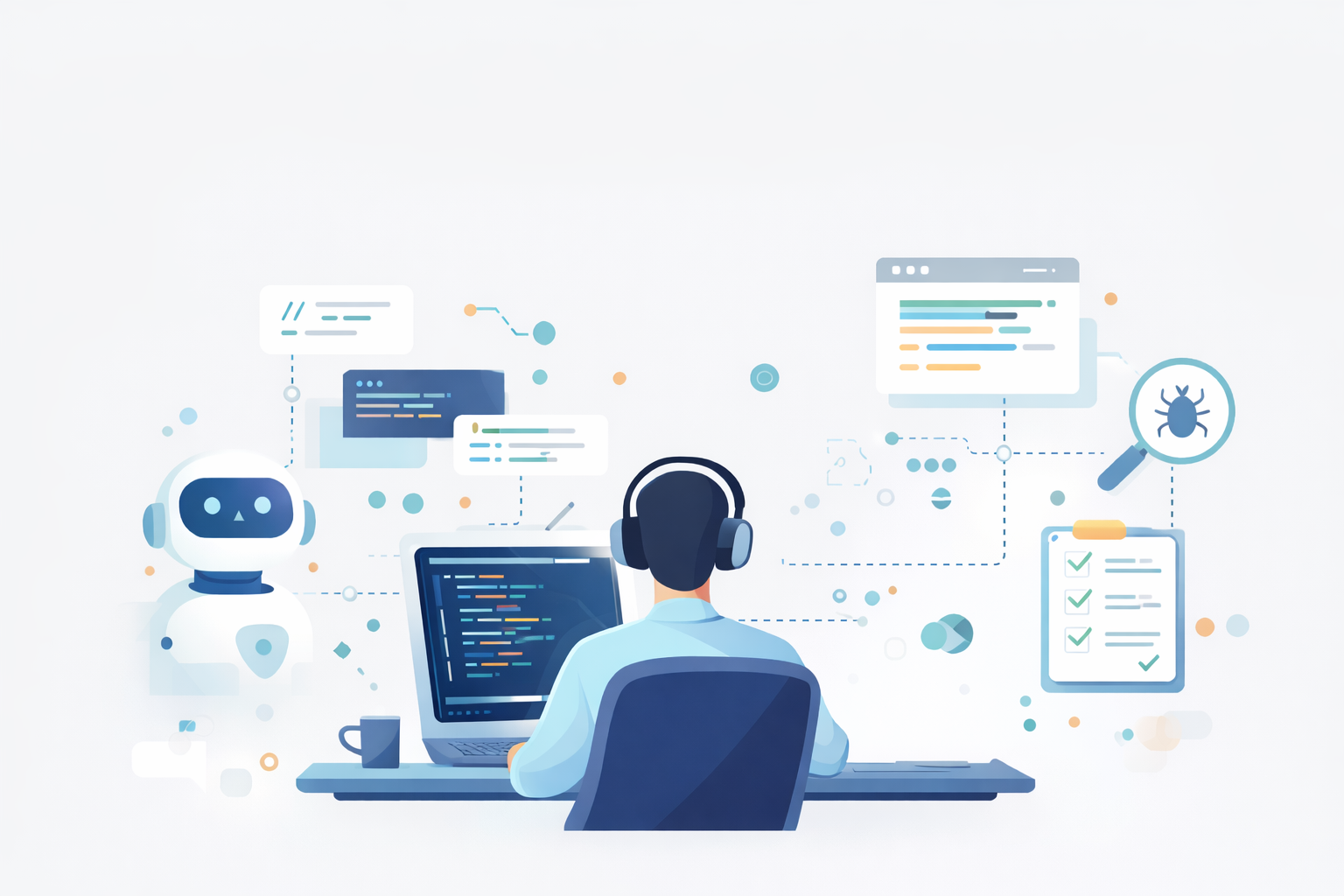
Real-Life Impact of Vibe Coding and AI in QA
Many engineering teams are already seeing measurable improvements by combining AI tools with rapid experimentation.
1. Faster Automation Development
In a typical QA environment, writing automation scripts for a new feature might take 1–2 days.
Using AI-assisted coding, testers can:
- generate initial scripts in minutes
- quickly refine the logic
- integrate them into automation frameworks
Teams have reported 40–60% faster automation development.
2. Faster Bug Detection in Agile Development
In Agile teams with frequent releases, QA teams often struggle to keep up with rapid feature updates.
By using AI tools to generate test scenarios quickly, testers can validate new features almost immediately after development.
This reduces bug leakage into production environments.
3. Real Example: API Testing Acceleration
In many projects, QA engineers need to test dozens of APIs.
Traditionally, testers manually create API requests and validation scripts.
Using AI-assisted vibe coding, testers can quickly generate scripts that:
- send API requests
- validate response structure
- check status codes
- verify response data
This allows testers to cover more APIs in less time, improving overall system reliability.
4. Faster Test Data Generation
Preparing realistic test data can be a major bottleneck.
AI tools can generate:
- large test datasets
- boundary value inputs
- randomized user profiles
- invalid data scenarios
This allows QA teams to perform more comprehensive testing without manual data preparation.
Limitations of Vibe Coding in QA
While vibe coding is powerful, it does have limitations.
Challenges include:
- scripts may lack structure
- automation may not be reusable
- difficult maintenance in large projects
- potential technical debt
Enterprise QA environments still require:
- structured test frameworks
- clear documentation
- CI/CD integration
- standardized testing processes
Therefore, vibe coding should be used as a supportive technique rather than replacing established QA practices.
The Future of QA Testing
The combination of AI and vibe coding is shaping the next generation of QA practices.
Future testing environments may include:
- AI-generated test suites
- self-healing automation scripts
- predictive defect detection
- intelligent test coverage analysis
QA engineers will shift from writing repetitive scripts to focusing on test strategy, risk analysis and product quality.
Conclusion
Vibe coding combined with AI is transforming QA testing by enabling faster experimentation, automated test generation and improved bug detection.
Real-world teams are already benefiting from:
- faster automation development
- quicker bug reproduction
- improved testing coverage
- reduced manual effort
Organizations that integrate AI-powered workflows into QA processes will be better positioned to deliver reliable, high-quality software at speed in modern development environments.